


Every year, many African manufacturers and distributors enter Q4 facing stock shortages, excess inventory, or delayed deliveries -not because demand was unpredictable, but because planning started too late.

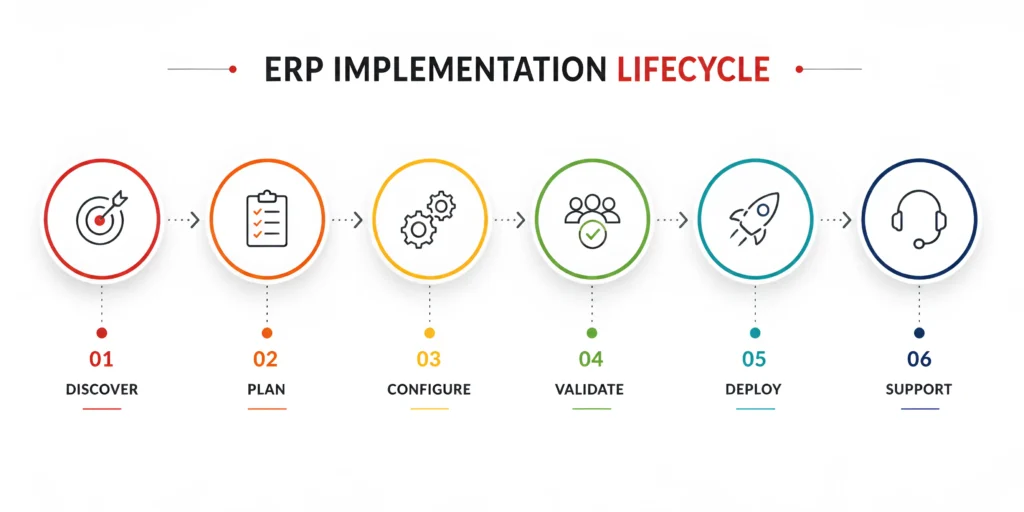
A successful ERP implementation is not primarily a technology project. After 25 years of delivering ERP implementations across Kenya and the wider region, the pattern is clear: the businesses that struggle are not struggling because of the software. They are struggling because of decisions made -and not made -before the first configuration screen was ever opened.
This is a practical guide for CEOs, CFOs, and COOs who are either evaluating an ERP implementation or navigating one already in progress.
The most common pattern in ERP projects is this: configuration completes on time, but key business decisions remain unresolved for weeks because the people who hold those decisions are simultaneously running operations -managing month-end, handling dispatch issues, filing tax returns, and managing procurement escalations.
Decisions that stall most often include:
The resolution is to build a business validation buffer into the project timeline -a structured phase after requirements workshops where named business owners confirm their stream’s process decisions before configuration is locked. This single addition has consistently improved go-live quality and reduced post-live rework.
In multi-site businesses -distribution companies, manufacturing groups, NGO networks -the process described by head office during requirements gathering is rarely the process that branch teams actually follow. The exceptions, workarounds, and regional variations that branches have developed over years to handle local realities are the ones that cause UAT failures.
The mitigation is process confirmation at the branch level before UAT begins -not just at head office. Skipping this step compresses the problem into the most expensive part of the project to fix it.
Data migration is almost always the longest single thread in an ERP implementation, and it is almost always underestimated. The spethe cific challenges include:
Data cleansing must begin during the project’s planning phase -not at migration. By the time cutover is approaching, the window for remediation is too small.
Training conducted once before go-live, covering all roles in a single session, is one of the most reliable predictors of poor user adoption. The people who need the system the most -warehouse operators, procurement clerks, accounts receivable teams -absorb training through repetition and practice on real scenarios, not through a one-day demonstration of a system they have never touched.
Role-specific training, delivered closer to go-live, using the organisation’s own data and actual business scenarios, consistently produces higher adoption rates and fewer post-live support calls. This is the approach Greytrix Africa follows across its implementations.
The first four to six weeks after go-live are the most operationally vulnerable period of any ERP project. Transaction volumes are real, errors have financial consequences, and the team is still building confidence in the system. Without a dedicated support structure during this period, small issues escalate and teams revert to manual workarounds that can persist for months.
A structured hypercare plan -with dedicated on-site or remote support, daily issue resolution, and a clear escalation path -is not optional. It is the difference between an implementation that succeeds and one that technically goes live but never delivers its expected value.
ERP implementation in East Africa is achievable, and when done correctly, it delivers measurable and lasting operational improvement. The pitfalls are known. The mitigations are proven. The difference between a project that succeeds and one that struggles is almost always the quality of the implementation partner and the rigour of the process they bring. Greytrix Africa has delivered ERP implementations for businesses including Mpesa Foundation Academy, M.P. Shah Hospital, SportPesa, and Green Resources -building implementations that are designed to run for years, not just to go live.
Greytrix Africa is a leading Sage business partner and ISV Partner offering Consulting, Implementation, and Development services for Sage X3, Sage 300, Sage 300 People (HRMS), Sage CRM, and Sage Intacct, covering East Africa, West Africa, SADC, and the Middle East region. We provide professional services including Implementation and Configuration, Business Process Analysis, Project Management, Integrations and Migrations, and Technical and Functional Support across industries such as Manufacturing, Distribution, Healthcare, Non-Profit, and Services.
