
In retail, the customer’s needs come first — understanding and serving them is what drives success. The way customers shop and interact with brands has changed dramatically: they now move between social media, mobile apps, online stores, and physical locations before finally making a purchase. This shift has made connected, consistent customer experiences essential for modern retailers.
Retailers have to connect their customer data across marketing, commerce, sales and customer service rather than managing each interaction in isolation. Salesforce helps retailers connect customer data, commerce, marketing, service, and in-store experiences, giving teams a more unified view of customer interactions across channels.
A Significant Shift in Retail Customer Journeys
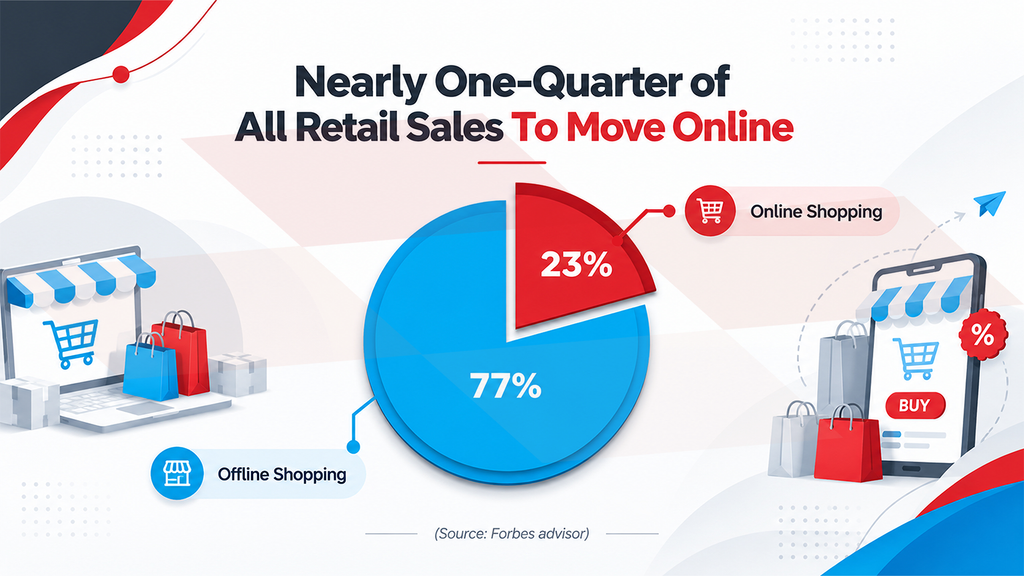
The line between online and offline retail has become increasingly thin — a customer might discover a product on social media, explore it online, examine it in-store, then contact support with a question. Delivering a consistent experience across this journey requires integrated platforms that retain context, rather than isolated tools for marketing, sales, service, and commerce. This shift is accelerating: according to Forbes Advisor, online channels are expected to account for nearly 23% of total retail purchases by 2027.
Understanding Omnichannel Retail Engagement
Omnichannel engagement is often misunderstood as simply offering customers multiple ways to interact with a brand. In reality, it focuses on ensuring that every channel works together as part of a single connected experience. For retailers, this means being able to recognize and respond to customers consistently across every interaction, regardless of where the journey begins or continues.
Solutions such as Salesforce for retail businesses, Salesforce for retail industry, and specialized Salesforce retail consulting services help organizations align their technology ecosystems so that data, teams, and processes remain connected across channels.
How Salesforce Platforms Work Together in an Omnichannel Retail Environment
To understand how omnichannel engagement works in practice, it helps to look at how different capabilities come together across a typical retail journey.
A customer might first encounter a targeted promotion through email or social media. Marketing teams can use Salesforce platforms to segment audiences and monitor cross-channel engagement tracking, helping them understand how customers interact with campaigns across digital channels.
When the customer clicks the promotion and visits an online storefront, the experience can be managed through Salesforce Commerce capabilities. At this stage, intelligent systems analyse browsing patterns and product interest to generate AI-driven recommendations and personalization, ensuring customers see products and offers that align with their preferences.
Behind the scenes, customer interactions from websites, mobile apps, and stores are brought together to create unified customer profiles. These profiles combine browsing behaviour, purchase history, engagement patterns, and support interactions into a single record.
With real-time data synchronization across channels, updates from one interaction immediately become visible across other systems. This means marketing teams, store associates, and service agents all work with the same current information.
If the customer later contacts support or visits a physical store, service representatives can access service case visibility with purchase history, allowing them to respond quickly and accurately without requiring the customer to repeat information.
Retailers can also measure campaign-to-commerce attribution, helping them understand which marketing activities ultimately result in purchases. Combined with multi-touch point follow ups, businesses can continue nurturing relationships through loyalty programs, personalized offers, or product recommendations even after the sale is complete.
Bringing Customer Data Together
One of the most common challenges retailers face is fragmented customer data — spread across commerce platforms, POS systems, marketing tools, loyalty programs, and service applications. When these systems operate independently, businesses only see partial views of customer activity.
Salesforce retail cloud addresses this by connecting commerce interactions with customer data across channels. When a customer browses, adds to cart, or completes a purchase, that activity is linked with in-store purchases, marketing engagement, and support interactions — creating unified customer profiles.
With real-time synchronization, teams across marketing, sales, and service always work with updated information, enabling more relevant engagement and better support.
Connecting Digital and In-Store Experiences
Customers now see a brand as one entity, not separate online and offline experiences — and they expect consistency across both.
Salesforce for retailers connects digital interactions with in-store operations through a unified data model, giving store associates access to online behavioural data so they can better understand customer preferences. Marketing teams can measure how campaigns drive store visits using cross-channel engagement tracking and campaign-to-commerce attribution, while service teams resolve queries faster with a complete, real-time interaction history.
The result: every department works off a single source of truth, enabling retailers to deliver seamless, omnichannel experiences at every touchpoint.
Personalization at Scale
Personalization is now core to modern retail — customers expect brands to anticipate their needs and surface relevant recommendations in the moment.
A customer browsing a product online may later see tailored recommendations for it, while store associates can draw on purchase history to recognize returning customers’ preferences instantly. Salesforce enables this through AI-driven recommendation engines that analyse behavioural patterns and engagement signals, powering predictive personalization across the customer journey. It also supports multi-touchpoint follow-ups — like loyalty offers, reminders, and product suggestions — helping retailers stay engaged with customers well after the initial purchase.
The payoff is loyalty: customers who feel understood are far more likely to keep engaging with the brand.
Supporting Collaboration Across Retail Teams
Customer engagement rarely belongs to a single department — sales, marketing, service, and store associates all shape the overall experience. When these teams rely on disconnected systems, collaboration suffers and information gaps emerge.
Salesforce platform addresses this by creating a shared data environment with common customer insights across teams. Marketing can analyse campaign performance and engagement patterns, service teams get case visibility paired with purchase history, and leadership can track customer engagement trends through centralized reporting and analytics.
This unified data access lets organizations coordinate more effectively and deliver consistent customer experiences.
Operational Visibility for Retail Leaders
Retail leaders must also manage operational challenges such as inventory management, order fulfilment, and demand forecasting. These operational elements directly influence customer satisfaction.
When operational systems remain disconnected from customer engagement platforms, businesses may struggle to provide accurate information about product availability or delivery timelines.
Salesforce is suitable for CRM–ERP integration, allowing retailers to connect operational data with customer engagement systems. By linking orders, invoices, and inventory information with customer records, organizations gain clearer visibility into demand patterns and purchasing behaviour.
These insights enable better planning for promotions, staffing, and inventory distribution.
The Broader Impact of Connected Retail Experiences
As retail continues to evolve, the importance of connected experiences becomes increasingly evident. Customers rarely think about the technology behind their interactions — what they notice is how effortless the experience feels.
Disconnected systems often create friction. Customers may need to repeat information, navigate inconsistent messaging, or experience delays when seeking assistance.
When systems work together, interactions feel natural. Customers can move between channels seamlessly, and businesses can respond with greater speed and accuracy.
Platforms such as Salesforce Retail CRM help retailers create these connected environments, allowing them to deliver personalized and consistent customer experiences across every touchpoint.
Key Capabilities of Salesforce for Retail:
| Capability | What It Enables |
| Unified Customer Profiles | Single view of customer across channels |
| Real-Time Data Sync | Consistent info across teams instantly |
| AI-Driven Personalization | Tailored recommendations at scale |
| Cross-Channel Engagement Tracking | Visibility into customer touchpoints |
| Campaign-to-Commerce Attribution | Connects marketing spend to sales |
| CRM-ERP Integration | Links operations with customer data |
Supporting Your Salesforce Implementation Journey
For organizations exploring how to bring these capabilities into their retail environment, the right guidance can make a significant difference. Greytrix has been working in the enterprise solutions space for over 25 years, helping organizations implement Salesforce platforms in ways that align closely with their operational needs.
Over the years, our teams have supported thousands of businesses across the globe in building CRM ecosystems that improve visibility, strengthen customer engagement, and support long-term growth.
Whether it involves implementing a Salesforce solution for retail industry requirements or supporting organizations across other sectors, our focus remains the same: understanding how each business operates and designing solutions that empower both teams and customers.
If your organization is exploring how Salesforce can support omnichannel retail engagement, our experts would be happy to guide you through the possibilities.
Book a demo today — we’re just one call away.
About Us
Greytrix – a globally recognized and one of the oldest Sage Development Partner and a Salesforce Product development partner offers a wide variety of integration products and services to the end users as well as to the Partners and Sage PSG across the globe. We offer Consultation, Configuration, Training and support services in out-of-the-box functionality as well as customizations to incorporate custom business rules and functionalities that require apex code incorporation into the Salesforce platform.
Greytrix has some unique solutions for Cloud CRM such as Salesforce Sage integration for Sage X3, Sage 100 and Sage 300 (Sage Accpac). We also offer best-in-class Cloud CRM Salesforce customization and development services along with services such as Salesforce Data Migration, Integrated App development, Custom App development and Technical Support business partners and end users. Salesforce Cloud CRM integration offered by Greytrix works with Lightning web components and supports standard opportunity workflow. Greytrix GUMU™ integration for Sage ERP – Salesforce is a 5-star rated app listed on Salesforce AppExchange.
The GUMU™ Cloud framework by Greytrix forms the backbone of cloud integrations that are managed in real-time for processing and execution of application programs at the click of a button.
For more information on our Salesforce products and services, contact us at salesforce@greytrix.com. We will be glad to assist you.