The financial infrastructure of the UAE is currently experiencing a historic paradigm shift. Guided by the Ministry of Finance and the Federal Tax Authority (FTA), the nation is transitioning toward a digital-first tax ecosystem. This regulatory evolution demands that local enterprises modernize their accounting frameworks immediately. The journey begins with a voluntary pilot phase in July 2026, culminating in a mandatory deadline on January 1, 2027, for all organizations generating at least AED 50 million in annual revenue.
E-Invoicing Integration with ERP: A Game Changer for Businesses in Dubai
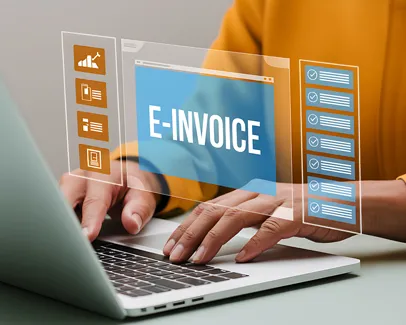
The financial infrastructure of the UAE is currently experiencing a historic paradigm shift. Guided by the Ministry of Finance and the Federal Tax Authority (FTA), the nation is transitioning toward a digital-first tax ecosystem. This regulatory evolution demands that local enterprises modernize their accounting frameworks immediately. The journey begins with a voluntary pilot phase in July 2026, culminating in a mandatory deadline on January 1, 2027, for all organizations generating at least AED 50 million in annual revenue.
For Dubai-based CFOs, the e-invoice integration with ERP is the primary mechanism for maintaining operational legality. This transition is not merely a compliance exercise; it represents the dawn of “Agentic Finance.” In this new era, sophisticated automation manages high-volume manual tasks, empowering finance leaders to dedicate their energy to high-level commercial strategy. This guide details why ERP & e-invoicing integration UAE is the definitive catalyst for your firm’s future success.
The 2026/27 Mandate: Understanding the Peppol 5-Corner Model
The UAE has selected the Peppol 5-Corner Model as the foundation for its Decentralized Continuous Transaction Control and Exchange (DCTCE) system. This sophisticated framework ensures that every business-to-business (B2B) and business-to-government (B2G) transaction undergoes real-time validation via the PINT-AE XML data standard.
To stay within the legal framework, your ERP must establish a link with an Accredited Service Provider (ASP). This provider serves as the vital access point that relays transaction data directly to the FTA. Without a high-performance e-invoice integration with ERP, attempting to manage this five-way communication loop manually is impossible for a modern business. Success requires a digital system capable of generating, authenticating, and transmitting data packets without human oversight.
Why Sage Intacct is the Preferred Choice for UAE CFOs
Regarding cloud tax invoicing UAE, Sage Intacct has surfaced as the premier scalable choice for Middle Eastern finance executives who have transitioned into strategic leadership roles.
- Real-Time PINT-AE Compliance UAE regulations mandate that every invoice includes precise Tax Registration Numbers (TRNs), AED valuations, and specific tax categories. Sage Intacct’s modular engine allows for the effortless mapping of your data to these PINT-AE requirements. This ensures every XML file is structured perfectly for the Peppol network, drastically lowering the risk of a rejection from the FTA.
- Automated AP and AR Workflows True e-invoice integration with ERP is a two-way street it involves both the issuance and the receipt of billing data. By bridging these workflows, your accounts payable department can eliminate manual data entry entirely. Supplier invoices are pulled directly into Sage Intacct as verified data, which erases human error and accelerates your payment cycles. This ensures your ERP & e-invoicing integration UAE provides a measurable return on investment that far exceeds basic compliance.
- Regional Scalability and Multi-Entity Support For firms operating across the borders of the UAE and Saudi Arabia, Sage Intacct simplifies the dual burden of FTA and ZATCA Phase 2 rules. The software allows leadership to consolidate multiple legal entities and oversee multi-currency reporting within a single dashboard. This harmonized approach to e-invoice integration with ERP ensures that your regional growth is never obstructed by mismatched tax laws.
Strategic Advantages of "Smart" E-Invoicing
Adopting automated e-invoicing solutions delivers benefits that extend well beyond avoiding legal penalties:
- Heightened Financial Transparency: Live dashboards offer a real-time pulse of your financial health, enabling CFOs to make data-driven decisions during market fluctuations.
- Audit Protection: Sage Intacct features embedded controls and comprehensive digital footprints for every ledger entry. This ensures your organization is perpetually audit-ready and strengthens your internal governance.
Operational Productivity: By automating recurring journal entries and intercompany settlements, your finance team can pivot from “number crunchers” to “business partners.”
Conclusion: Securing Your Future with Greytrix Middle East
The arrival of mandatory digital invoicing marks the most transformative update to the UAE’s tax landscape since the rollout of VAT. Taking a proactive stance on e-invoice integration with ERP is the only guaranteed way to ensure your business remains resilient and competitive.
By choosing Sage Intacct and collaborating with Greytrix Middle East, you are deploying automated e-invoicing solutions that optimize efficiency and provide the real-time insights required to dominate the Dubai market. Do not wait for the July 2026 pilot commence your cloud tax invoicing UAE journey today and stay ahead of the curve through expert ERP & e-invoicing integration UAE.
Our Partnerships