
Tag Archives: miscellaneous receipt

How to increase product stock inventory using Miscellaneous Receipt in Sage X3

To add stock to a product on a site in Sage X3, use the Miscellaneous Receipt function. This allows a user to increase the inventory on hand of a product without the issuing a purchase order or a work order. Steps: 1.Go to Stock > Miscellaneous Receipts Fig 1: Miscellaneous Receipts Navigation 2.Select Transaction Type… Read More: How to increase product stock inventory using Miscellaneous Receipt in… »
Setting Up Automatic Cost Types for Miscellaneous Receipts

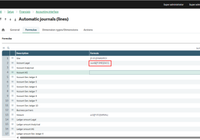
New Stuff: Creating a Custom Sequence Number in Sage X3 Using a Function Figure 1 Figure 2 Figure 3 Figure 4 5. On the Miscellaneous Receipts screen, you may wish to hide the price and order price fields. They will NOT show the costing that will be used. Rather, they will remain blank, which can… Read More: Setting Up Automatic Cost Types for Miscellaneous Receipts »

Weigh Scale Customization for Sage X3

Know How we helped Client A to Manage Their Inventory with Automation Efficiently If you struggle with manual weight entries, this blog is for you! Find out how we helped Client A scale their processes’ efficiency with Weigh Scale Customization for Sage X3. Businesses constantly look for ways to fine-tune their processes to accommodate their… Read More: Weigh Scale Customization for Sage X3 »

How to create a requested sequence number in Sage X3

In Sage X3, (formerly known as Sage Enterprise Management or Sage ERP X3), a sequence number is a unique identifier used to generate sequential numbers for documents, transactions, or records. Sequence numbers help maintain consistency and order in various processes within the ERP system. Here’s how you can work with sequence numbers in Sage X3:… Read More: How to create a requested sequence number in Sage X3 »

Posting Old Stock Entries for Miscellaneous Issues/ Receipts in Sage X3

Transactions from Miscellaneous Issues/Receipts were not linked to the automatic journal. Due to this, the system does not provide stock impact for entries that users create for transactions (i.e., STK entries). All new entries will have STK impact if we select an automatic journal to that entry transaction. The question is, what happened to the… Read More: Posting Old Stock Entries for Miscellaneous Issues/ Receipts in Sage… »

How to use Stock Movement Codes in Product category?

In Sage X3 there is some multiple type of movement code , found in Miscellaneous table 14. Basically movement code is used to specify when a product is received or issued . One of the predefined code is Status Change CHS which is used to further define the management rules on the product category by… Read More: How to use Stock Movement Codes in Product category? »

Restriction on Duplicate LOT-SUBLOT creation

As everyone knows, LOT No creation for the raw materials can be done in Purchase Receipt and Miscellaneous Receipt transactions in Sage X3. In LOT No field, LOT will be generated either automatically or manually. User can enter LOT No manually. Logically, LOT No should be unique for every Product as per the LOT-SUBLOT concept.… Read More: Restriction on Duplicate LOT-SUBLOT creation »

How to process data in Put-away plan in Sage X3

Put-away Plan or  Storage Plan is a functionality to plan stock change from dock location category to another location or internal location. Sage X3 offers flexibility to manage default location for a product within site for different operations. For instance, if a product exists in multiple locations of the site and for each operations (receipts,… Read More: How to process data in Put-away plan in Sage X3 »

Validation on Miscellaneous receipt based on Tolerance value

For any transaction in Sage X3, user can enter price manually as per his/her requirement. But one of our client requested to add validation on the price field in Miscellaneous Receipt Transaction. To achieve this requirement, we have added “Tolerance Percentage” field in the Product master as shown in the below screenshot. In which user… Read More: Validation on Miscellaneous receipt based on Tolerance value »